![The 1064/364-Day Bitcoin Cycle [INFOGRAPHIC]](https://www.shortspike.com/static/34/1064-364-cycle__scale_and_crop__500x281.png)
 Markets, data, and the ideas shaping them.
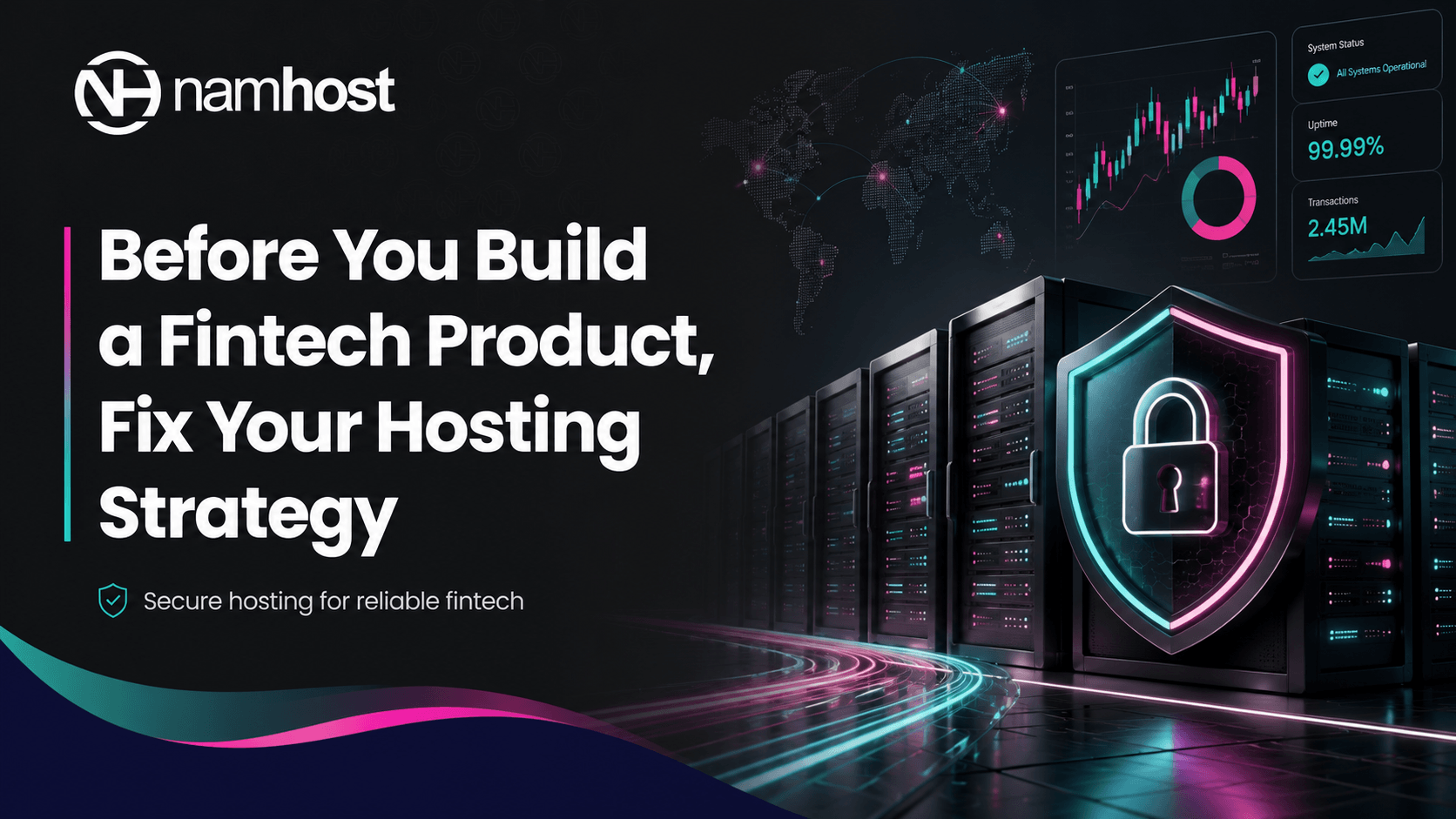
Before You Build a Fintech Product, Fix Your Hosting Strategy
Fintech teams often spend most of their security energy on the application itself.
That makes sense. Secure code, strong authentication, clean payment flows, audit logs, encrypted data, API controls, and proper access management are all essential.
But they are not enough.
A fintech product is not just a codebase. It is a codebase running on infrastructure. That infrastructure has to stay online, respond quickly, resist attack, recover from failure, and protect sensitive financial data.
This is why hosting should be treated as part of the security model from day one.
If you are building a fintech product, your hosting strategy is not a minor technical detail. It can affect security, performance, reliability, launch timelines, and user trust.
Bad Hosting Can Undermine Good Software
A fintech platform can be well-designed and still suffer because of poor hosting decisions.
The risks are not theoretical. Weak hosting can lead to:
- Slow response times
- Unstable performance
- Poor isolation between accounts
- Limited control over server configuration
- Weak backup coverage
- Delayed patching
- Incomplete monitoring
- More complicated incident response
- Risky migration work close to launch
That last point is easy to underestimate.
Many projects start cheaply, which is understandable. During early prototyping, shared hosting can be tempting because it is affordable and quick to set up. For basic testing, landing pages, internal previews, and early proof-of-concept work, shared hosting can help reduce initial cost.
But there is a trade-off.
If the project becomes a real fintech product, that hosting environment will probably need to change before launch. Moving from shared hosting to a VPS or dedicated server introduces migration work, DNS changes, environment differences, deployment adjustments, database movement, testing, and possible downtime planning.
That can create delays exactly when the business wants to go live.
Saving money early can make sense, but only when the team understands the migration cost later.
Dedicated Servers Are Still the Strongest Starting Point
For serious fintech workloads, a dedicated server is usually the best foundation.
A dedicated server gives your team full control over the environment. You are not sharing the same hosting space with unrelated websites. You can harden the server for the specific application, configure the firewall properly, define backup policies, tune performance, control updates, manage access, and reduce unnecessary software.
That level of control matters in fintech.
Financial platforms need consistency. Users expect dashboards, transactions, reports, account screens, and API calls to work quickly and predictably. If the server is slow, overloaded, or affected by other customers on the same machine, the product feels unreliable even if the code is sound.
A dedicated server does not automatically make a product secure. It still needs competent administration, patching, monitoring, backups, access control, and application-level security. But it provides the cleanest and most controllable environment.
For production fintech systems, that is often the right place to start.
A VPS Can Also Be Very Secure
A dedicated server is not always necessary on day one.
A properly managed VPS can also be a very secure and practical option, especially for early-stage fintech products, controlled production launches, internal platforms, APIs, and smaller transactional systems.
The important part is that it must be properly managed.
A VPS gives you much more control than shared hosting. You can configure the web server, database, firewall, SSL, SSH access, system updates, security tooling, and deployment process around the needs of the application.
A VPS can be a strong middle ground: more secure and flexible than shared hosting, but more affordable than dedicated hardware.
The mistake is not using a VPS. The mistake is treating a VPS like shared hosting and leaving it unmanaged.
For fintech, a VPS should still have proper server hardening, reliable backups, monitoring, security scanning, strong access controls, and a clear update process.
Shared Hosting Has a Place, But Not for Serious Fintech Production
Shared hosting is not useless.
It can be a sensible low-cost option for:
- Prototypes
- Static marketing pages
- Early concept testing
- Non-sensitive demo environments
- Basic content sites
But it is usually the least recommended option for production fintech systems.
The reason is control.
On shared hosting, your application runs in a broader multi-tenant environment. You usually have less control over server configuration, security policy, background services, performance tuning, and isolation. That is acceptable for simple websites. It is much harder to justify for financial software.
If the platform handles sensitive user data, transactional workflows, payment-related processes, financial records, client dashboards, or private APIs, shared hosting should not be the long-term production environment.
It may save money during testing, but it can also create a migration burden before launch.
For fintech, that timing matters.
Control Panels Matter More Than People Think
Hosting control panels are useful because they make server management easier. They help manage domains, databases, email, SSL certificates, files, users, and hosting accounts.
But control panels also add another software layer to the server.
That software layer has to be licensed, updated, secured, and monitored. For fintech environments, every extra layer should justify itself.
This is one reason many teams have moved away from cPanel. The licensing costs have become harder to justify, and any widely used control panel also becomes a recurring security consideration because vulnerabilities and patches must be watched closely.
That does not mean cPanel can never be used securely. It means it is no longer the automatic default for every hosting setup.
DirectAdmin is often a better practical option. It is lighter, more cost-effective, and provides the core hosting management features most teams actually need. Namhost switched to DirectAdmin years ago, and that move has made a meaningful difference in cost, maintainability, and day-to-day hosting management.
Panel-less hosting is also possible, but it should not be oversold.
Running without a control panel can reduce software overhead and attack surface, but it requires a serious systems administrator. For most teams, it is rarely the best operational choice. A badly managed panel-less server is not more secure simply because it has no panel.
In practice, a well-managed DirectAdmin environment with strong server security tooling, reliable backups, scanning, and high-quality code is often the better balance.
DirectAdmin, Imunify360, ModSecurity, Scanning, and Good Code
Security works best in layers.
One of the reasons Namhost is a strong hosting option for fintech-oriented projects is the practical security stack available across its hosting environment.
DirectAdmin provides the hosting control layer.
Imunify360 adds server-level protection for Linux web servers, including malware protection, firewall capabilities, web application firewall features, proactive defence, and broader hosting security controls.
ModSecurity adds another important web application firewall layer, helping block common malicious HTTP requests before they reach the application.
Together, Imunify360 and ModSecurity create a powerful security combination. For fintech applications, this matters because the server needs to defend against more than just mistakes in the codebase. It also has to deal with bots, probing, exploit attempts, malicious traffic, brute-force behaviour, and compromised files.
But tooling alone is not enough.
The application code still needs to be written properly. Authentication must be secure. Input validation must be handled correctly. Sensitive data must be protected. Dependencies must be maintained. Access control must be enforced. Logs must be useful. Deployments must be controlled.
The strongest approach is layered:
- High-quality application code
- Secure hosting
- DirectAdmin for practical server management
- Imunify360 for server-level protection
- ModSecurity for web application firewall coverage
- External security scanning
- Reliable backups
- Proper systems administration
This is the combination that has already proven itself in demanding fintech environments.
The Teruza-built Koinexpert platform traded R3.3 billion over 2.5 years without a single security incident while using this kind of approach. That is the kind of operational track record fintech teams should pay attention to.
Security Scanning Must Cover the Live Site Too
Security scanning should not stop at the codebase.
A codebase can be clean while the live environment still has issues. The deployed site may have exposed services, weak headers, outdated dependencies, TLS problems, vulnerable plugins, misconfigured permissions, open directories, or server-level weaknesses.
That is why scanning must include the public-facing site itself.
A proper security process should look at:
- The codebase
- The deployed website
- The server configuration
- Publicly exposed services
- APIs
- Authentication flows
- Dependencies
- SSL and TLS configuration
- Security headers
- Known vulnerabilities
Teruza offers an affordable security scanner through its cyber-security services. This helps teams detect weaknesses in websites, applications, APIs, and server environments before they become incidents.
Teruza is also adding code scanning support in the near future, which will make it easier for teams to check both the application and the deployed environment as part of the same security workflow.
For fintech, this matters because security is not a once-off task before launch. It has to be continuous.
Backups Are Part of Security
Backups are not just an operational convenience. They are part of the security strategy.
If a server fails, a deployment goes wrong, files are corrupted, data is damaged, or an incident occurs, the question becomes simple: how quickly can the system recover?
For fintech, the answer has to be clear before something goes wrong.
A proper backup strategy should include:
- Regular automated backups
- Off-server backup storage
- Geographic redundancy
- Restore testing
- Database backup coverage
- Clear recovery procedures
- Separation between production and backup environments
This is another reason Namhost is a practical recommendation. Its dual-backup strategy, with backup coverage in Johannesburg and Cape Town, gives an additional layer of resilience. If one location has a problem, there is still another backup location available.
That matters.
Backups do not prevent every incident, but they reduce the damage when something does go wrong. In fintech, recovery is just as important as prevention.
Speed Is Crucial for Fintech Trust
Security is not the only hosting concern.
Speed matters too.
A slow fintech platform creates doubt. Users retry actions. Transactions feel uncertain. Dashboards feel unreliable. Support requests increase. API clients time out. The business starts dealing with symptoms that could have been prevented with better infrastructure.
This is why local hosting matters.
If most of the users are in South Africa, hosting in South Africa is usually the right move. Shorter network distance can reduce latency and make the application feel faster and more stable.
For fintech, that responsiveness is not cosmetic. It affects trust.
Users need to feel that the platform is reliable. Every delay, timeout, and failed request weakens that trust.
A fast, local, well-managed hosting environment gives the product a stronger operational foundation.
Why Namhost Is the Recommended Hosting Partner
Namhost is the recommended hosting partner because it provides the practical hosting options fintech teams need: shared hosting for early low-risk testing, VPS hosting for more controlled environments, and dedicated servers for serious production workloads.
More importantly, Namhost’s setup aligns well with the kind of layered security approach fintech projects should use.
The recommended hosting path is simple:
- Start with shared hosting only if the project is still a prototype, demo, or low-risk test.
- Move to a VPS when the product needs proper control, isolation, and production readiness.
- Use a dedicated server when the platform handles serious fintech workloads, sensitive financial data, or significant transactional volume.
For most real fintech products, the long-term answer should be a VPS or dedicated server, not shared hosting.
Namhost is also the host used by Shortspike and by Teruza, the creators of Shortspike. That recommendation is based on practical operating experience, not theory.
The Bottom Line
Before building a fintech product, fix the hosting strategy.
Good code matters. Secure authentication matters. Clean architecture matters. But the hosting environment has to support the same security and reliability goals.
A dedicated server is usually the strongest production foundation. A well-managed VPS can also be very secure. Shared hosting can save money during prototyping, but it is rarely the right place to run a serious fintech platform.
DirectAdmin is usually the more practical control panel choice. Panel-less hosting is an option for teams with strong systems administration, but it is rarely the best default. For most fintech projects, DirectAdmin combined with Imunify360, ModSecurity, Teruza security scanning, proper backups, and high-quality application code is the stronger operational choice.
Secure hosting is not just where the product lives.
It is part of what makes the product trustworthy.
POPULAR ARTICLES
View all