![The 1064/364-Day Bitcoin Cycle [INFOGRAPHIC]](https://www.shortspike.com/static/34/1064-364-cycle__scale_and_crop__500x281.png)
 Markets, data, and the ideas shaping them.
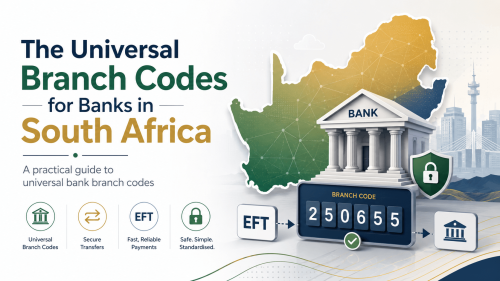
The Universal Branch Codes for Banks in South Africa
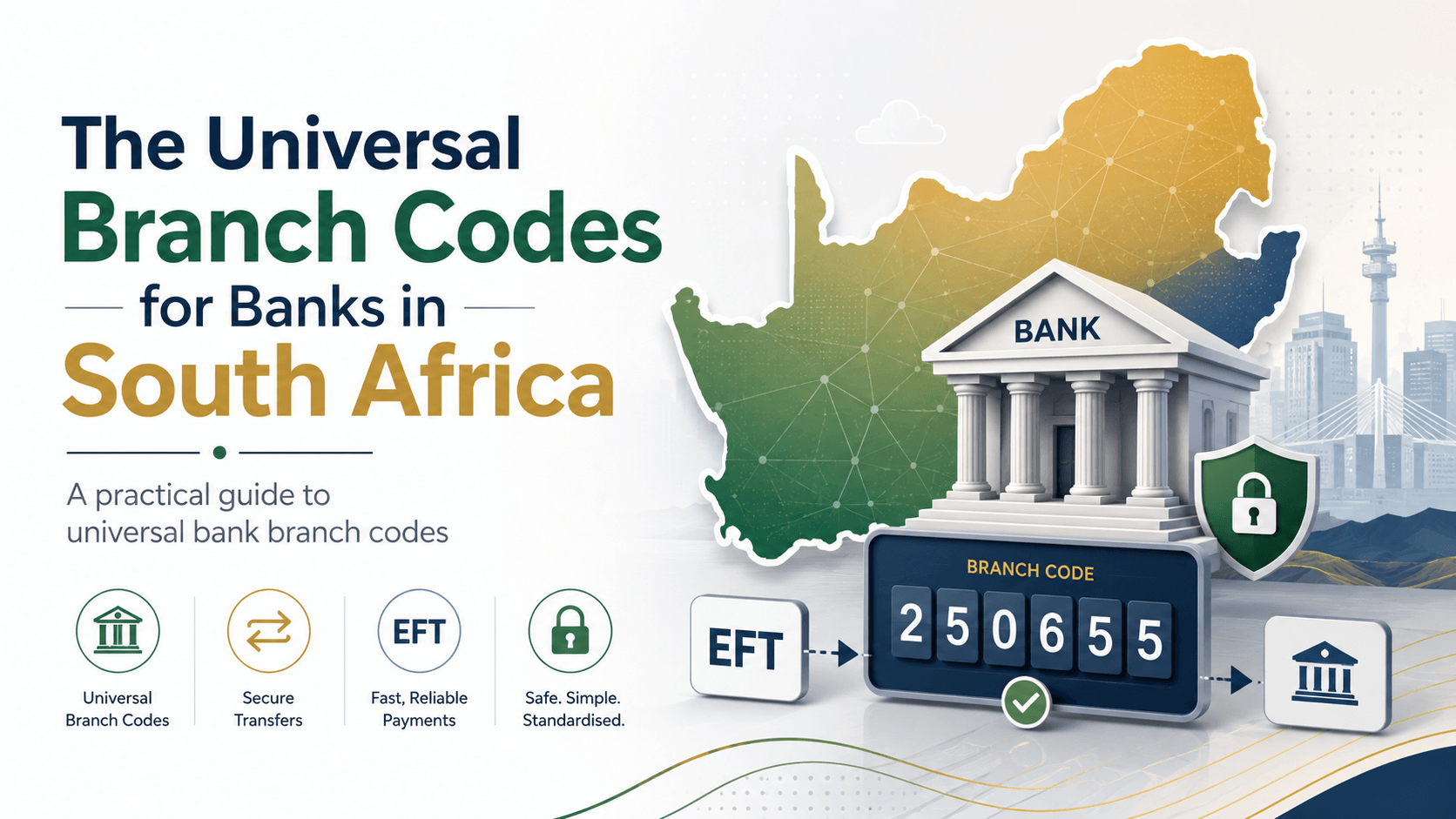
When you make an EFT payment in South Africa, you are usually asked for three basic details: the recipient’s bank, account number, and branch code. In the past, the branch code often referred to the specific physical branch where the account was opened. Today, most South African banks support a simpler option: the universal branch code.
A universal branch code is a single branch code that can be used for payments to accounts at a particular bank, regardless of the branch where the account was opened. In payment-file specifications used in South Africa, the recipient branch field can contain either the recipient’s specific branch code or the universal branch code for the relevant bank.
What is a universal branch code?
A universal branch code is a centralised bank branch code used to route local payments to the correct bank. It is useful because you do not need to know the recipient’s exact branch. For example, instead of finding the specific branch where an account was opened, you can usually use the bank’s universal branch code.
In practice, this makes EFTs easier and reduces the risk of selecting the wrong branch from a long branch list.
Universal branch code vs branch code vs SWIFT code
A branch code identifies a bank branch or a centralised payment branch inside the South African clearing system. A universal branch code is the default branch code for a whole bank. A SWIFT/BIC code is different: it is used mainly for international payments.
For local South African EFTs, the universal branch code and account number are usually the important fields. For international transfers, the sender may also need the bank’s SWIFT/BIC code and other details required by the receiving bank.
Why universal branch codes matter
Universal branch codes matter because they make bank payments faster to capture and easier to validate. Businesses use them for supplier payments, debit orders, payroll, refunds, and customer payouts.
They are also useful for individuals because they remove uncertainty. Instead of searching for a physical branch, you can usually enter one universal code for the recipient’s bank and proceed with the payment.
Universal branch codes for South African banks
The table below is a practical EFT reference list. Codes should be verified with the recipient’s bank before high-value or time-sensitive payments, especially for newer banks, foreign bank branches, legacy brands, or banks with product-specific payment rules.
| Bank | Universal branch code |
|---|---|
| Absa Bank | 632005 |
| Access Bank South Africa | 410105 |
| African Bank | 430000 |
| African Bank Business / former Grindrod-related business banking | 584000 |
| Al Baraka Bank | 800000 |
| Bank of China | 686000 |
| Bank Zero | 888000 |
| Bidvest Bank | 462005 |
| Capitec Bank | 470010 |
| Capitec Business | 450105 |
| Citibank | 350005 |
| Discovery Bank | 679000 |
| Finbond Mutual Bank | 589000 |
| First National Bank / FNB | 250655 |
| FirstRand Bank | 250655 |
| HBZ Bank | Verify before use |
| HSBC Bank | 587000 |
| ICICI Bank | 362000 |
| Investec Bank | 580105 |
| JPMorgan Chase Bank | 432000 |
| Nedbank | 198765 |
| Old Mutual Bank / OM Bank | Verify before use |
| People’s Bank / Pep Bank | 400001 |
| Postbank | 460005 |
| Sasfin Bank | 683000 |
| Société Générale Johannesburg Branch | 351005 |
| Standard Bank | 051001 |
| Standard Chartered Bank South Africa | Verify before use |
| State Bank of India | 801000 |
| TymeBank / GoTyme Bank | 678910 |
| The Royal Bank of Scotland N.V. / ABN AMRO legacy listing | 740000 |
Common universal branch codes in South Africa
For most consumer and small-business EFTs, these are the codes people search for most often:
| Bank | Universal branch code |
|---|---|
| Absa | 632005 |
| Capitec | 470010 |
| FNB | 250655 |
| Nedbank | 198765 |
| Standard Bank | 051001 |
| Investec | 580105 |
| African Bank | 430000 |
| Discovery Bank | 679000 |
| TymeBank / GoTyme Bank | 678910 |
| Bank Zero | 888000 |
| Bidvest Bank | 462005 |
| Postbank | 460005 |
When should you use a universal branch code?
Use a universal branch code when you are making a normal local EFT and the banking platform asks for a branch code. It is usually safer and simpler than guessing the recipient’s physical branch.
You should still confirm the account number, account type, recipient name, and bank name before paying. A correct branch code does not guarantee that the account number or recipient details are correct.
Can you use a universal branch code for international payments?
No, not on its own. A universal branch code is mainly used for local South African banking transactions. International payments normally require different routing information, such as a SWIFT/BIC code, the recipient’s bank details, and sometimes intermediary bank details.
If you are receiving money from outside South Africa, ask your bank for its international payment instructions before sharing your details with the sender.
Final note
Universal branch codes make South African EFT payments simpler, but they are still payment-routing details. Banks can merge, rebrand, migrate products, or use different codes for specific services.
Before paying a large amount, confirm the branch code directly from the recipient’s bank account confirmation letter, banking app, official bank website, or customer support channel.
POPULAR ARTICLES
View all